There is a moment many businesses experience but rarely talk about. You post consistently, you invest time into visuals, and you try to stay active, yet your social media feels quiet. Engagement is low, comments are rare, and it often feels like your content disappears without impact.
From my perspective as someone who closely observes digital behavior, this silence is not random. It is not simply caused by algorithms or timing. In most cases, there are deeper structural issues behind it. These issues are often subtle, but they shape how audiences perceive and interact with your content.
Understanding these hidden factors is the first step toward turning a quiet presence into an active and engaging one.
The Illusion of Activity vs Real Engagement
One of the biggest misconceptions I see is the belief that posting frequently will automatically lead to engagement. Many businesses focus on staying active, but activity alone does not create connection.
There is a clear difference between being visible and being relevant. A feed can look busy, but if the content does not resonate, it will not generate interaction.
Real engagement happens when content:
- Feels relatable and timely
- Offers value or insight
- Encourages response or discussion
- Reflects audience interests
Without these elements, content becomes noise rather than communication.
Lack of Clear Content Direction
Another common issue is the absence of a clear content direction. When posts feel random or disconnected, audiences struggle to understand what the brand stands for.
From what I have observed, strong social media accounts usually follow a structured approach. They know their themes, their message, and their purpose.
A clear content direction typically includes:
- Defined content pillars
- A consistent message across posts
- Alignment with business goals
Without this clarity, content loses impact and fails to build recognition.
Posting Without Understanding Your Audience
Many businesses create content based on internal ideas rather than audience needs. This disconnect is one of the main reasons engagement remains low.
Understanding your audience means going deeper than basic demographics. It involves understanding behavior, preferences, and expectations.
Important aspects to consider include:
- What problems your audience faces
- What type of content they engage with
- What motivates them to interact
When content aligns with these insights, engagement becomes more natural.
Inconsistent Brand Voice and Messaging
Consistency is key to building trust and recognition. When tone and messaging constantly change, it becomes difficult for audiences to connect.
From my observations, successful brands maintain a consistent voice. This creates familiarity and makes the content easier to recognize.
Consistency should apply to:
- Tone of communication
- Visual identity
- Core messaging
When everything feels aligned, the brand becomes stronger and more memorable.
Content That Does Not Create Connection
Many businesses focus on sharing information, but information alone is not enough. Social media is built on connection, not just communication.
Content that performs well often:
- Shares relatable experiences
- Tells simple and engaging stories
- Reflects real situations
- Invites interaction
From what I have seen, audiences engage more with content that feels human rather than purely promotional.
Overlooking Timing and Platform Behavior
Timing plays a significant role in visibility. Posting at the wrong time can reduce the reach of even the best content.
Each platform has its own behavior patterns. Understanding these patterns can improve performance.
Key considerations include:
- When your audience is most active
- What type of content works best on each platform
- How often you should post
Ignoring these factors can make content feel invisible.
Weak Hooks and First Impressions
The first few seconds determine whether users stop or scroll. A weak opening can cause content to be ignored instantly.
A strong hook should:
- Capture attention immediately
- Create curiosity
- Clearly communicate value
Common issues I often see include slow introductions and unclear messaging. Improving this element alone can significantly increase engagement.
Ignoring Data and Performance Signals
Data provides valuable insights, yet many businesses do not use it effectively. Without analyzing performance, it is difficult to improve.
From my perspective, data should guide content decisions. It reveals what works and what does not.
Key metrics to monitor include:
- Engagement rates
- Reach and impressions
- Audience behavior
Using this information allows businesses to refine their strategy over time.
Read also : Best Social Media Strategies for Engagement 2026
The Impact of Silent Social Media on Business Growth
A quiet social media presence affects more than engagement. It also influences how a brand is perceived.
Low interaction can lead to:
- Reduced credibility
- Lower visibility
- Missed opportunities for connection
- Decreased conversion potential
From what I have observed, social media often acts as the first impression of a business. If it feels inactive or unengaging, it can affect trust.
How to Fix a “Quiet” Social Media Presence
Improving performance requires a shift in mindset. It is not about posting more, but about posting with intention.
Some effective strategies include:
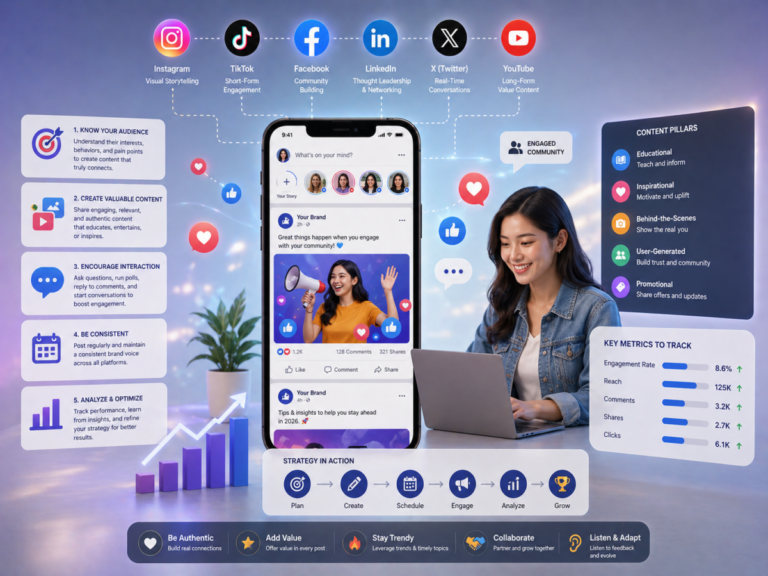
- Defining clear content pillars
- Understanding audience behavior
- Creating engaging and relatable content
- Testing and refining different formats
- Reviewing performance regularly
Consistency combined with strategy is what drives long term results.
Conclusion
The real reason your social media feels quiet is not always obvious. It is usually the result of small gaps in strategy, content, and audience understanding.
From what I have seen, businesses that address these issues are able to transform their presence. They move from simply posting content to building real engagement.
Ultimately, success on social media is not about volume. It is about relevance, clarity, and connection.